
Decentralized Smart Contracts Without Owners: A Comprehensive Analysis
Decentralized Smart Contracts Without Owners: A Comprehensive Analysis
Understanding True Decentralization
Decentralized smart contracts have the potential to revolutionize the way we enter into and enforce agreements, as they can facilitate the automation of complex processes and remove the need for intermediaries to facilitate transactions.
In a traditional smart contract, the owner is responsible for initiating and managing the contract. However, in a decentralized smart contract without an owner, the contract is self-sufficient and can execute actions autonomously.
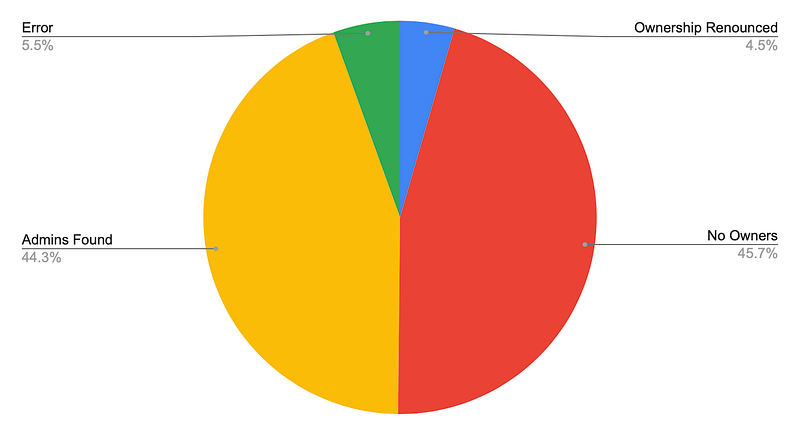
We picked the top 3278 contracts from CoinMarketCap. We got 2213 Ethereum smart contracts and 1068 BSC Smart Contracts to analyze how many contracts have renounced ownership or don’t have any owner.
Ethereum Smart Contracts:
99 out of 2213 had their ownership renounced, and 1001 contracts had no owner at all.

BSC Smart Contracts:
While for BSC contracts, 99 out of 1070 contracts had their ownership renounced, and 1001 had no owner.
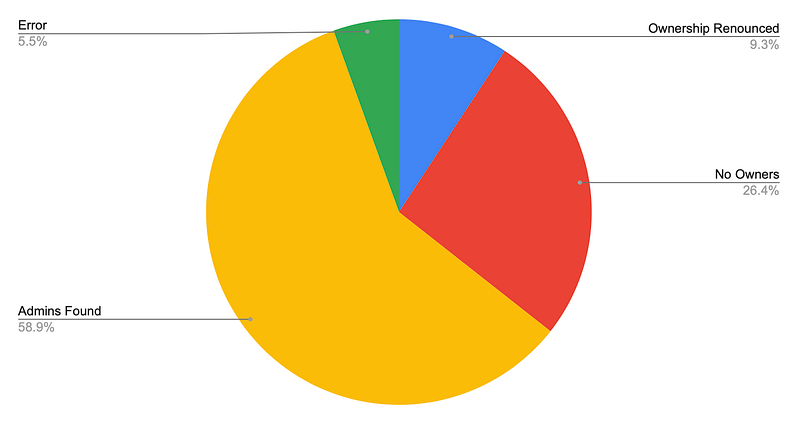
Ethereum-based smart contracts had 14.6% fewer contract owners than those on the BSC chain, indicating greater decentralization in Ethereum-based contracts.
Why do Smart Contracts have owners?
Smart contracts on a blockchain typically have “owner privileges” because they are implemented with a set of permissions that determine who has the ability to execute certain functions or make changes to the contract.
The purpose of these privileges is to give the contract owner or the individual or entity that created and deployed the contract some level of control over the contract and its execution. For example, the contract owner may have the ability to update the contract’s code or to pause or cancel the contract if necessary.
Having owner privileges can be useful in certain situations, such as if a contract bug needs to be fixed or if the contract needs to be updated to reflect changing circumstances. However, it is important to carefully consider the permissions granted to the contract owner, as they could be misused if the owner is not trustworthy.
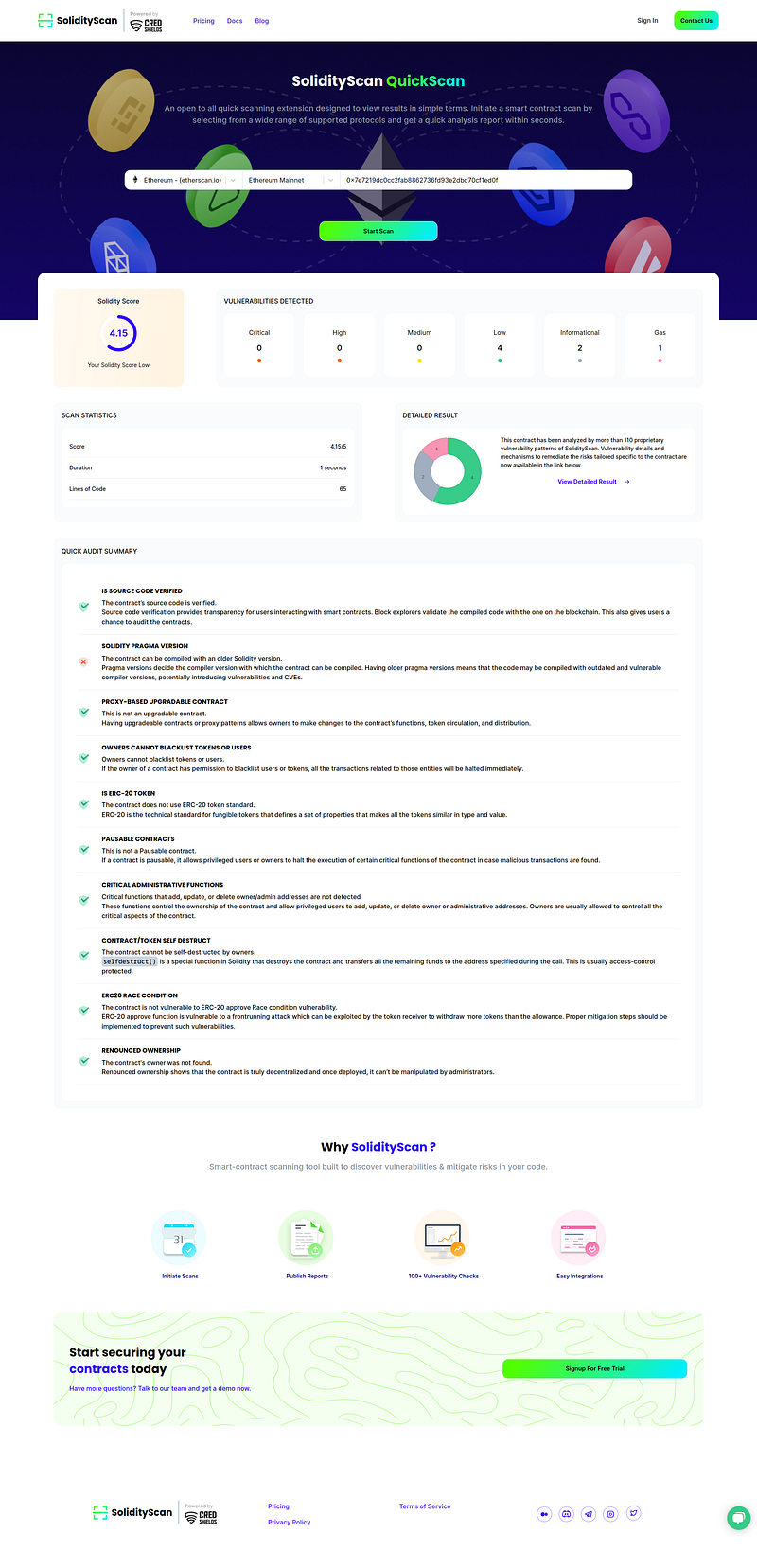
We at SolidityScan have developed a public tool to assist individuals in comprehending a contract’s privileges and capabilities, providing a clear explanation in layman’s terms and identifying potential red flags within the contract.
https://solidityscan.com/quickscan
Conclusion:
In general, it is a good practice to design smart contracts to strike a balance between the need for flexibility and the need for security and trust. This may involve using multiple owner accounts with different permissions or implementing measures to ensure that any changes to the contract are made in a transparent and accountable manner.
SolidityScan is an advanced smart-contract scanning tool that discovers vulnerabilities and reduces risks in code. Request a security audit with us, and we will help you secure your smart contracts. Signup for a free trial at https://solidityscan.com/signup